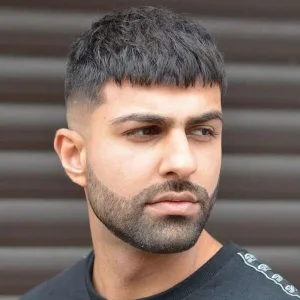
25 Reverse Mohawk Hairstyles for Men: The Inverse Mohawk Guide
A reverse mohawk flips the classic mohawk’s silhouette inside out. Instead of shaving the sides
and growing a tall strip down the center, you keep length along the sides and back and shave —
or clipper-buzz — a strip down the middle of the scalp, usually running from somewhere around
the crown toward the front hairline. Some barbers call it an “inverse mohawk” or a “reverse
Mohican” for the same reason: it’s the negative-space version of the style everyone already
recognizes.
The appeal is pretty specific. It reads as bold and graphic in photos and under bar lighting, but
day-to-day it can look more like a side-part or brushed-back style with a hidden design, because
the shaved strip usually isn’t fully visible unless the sides are pushed out of the way or
deliberately styled to expose it. It’s also a genuinely good option for guys who are growing out a
traditional mohawk or an undercut and don’t want to commit to short sides the whole time, since the
long-side hair does most of the everyday styling work. Below are 25 real, technically distinct
ways to wear it, organized roughly from the baseline version through length, texture, color, and
combination variants.
1. Classic Skin-Shaved Center Reverse Mohawk
This is the baseline version and the one most people picture when they hear “reverse mohawk.” The
barber sections off a strip roughly 1 to 1.5 inches wide running from the crown (or just behind
it) to the front hairline, then shaves it down to skin with a straight razor or a clipper run
without a guard. Everything outside that strip — the sides, the back, and often the front corners
— is left at whatever length you’re growing it to, typically 3 inches or longer so it has enough
weight to fall over and cover the shaved section when you want it hidden.
Because it’s shaved to skin, the strip grows back fast and needs a razor touch-up every 5 to 7
days to stay crisp — faster than almost any other maintenance interval on this list. It’s the
sharpest-looking version in person and the one that photographs best when the sides are pushed
back or pinned, but it’s also the highest-upkeep option, so it suits guys who are comfortable in a
barber’s chair weekly or who are confident enough with clippers to maintain it themselves at home.
2. Buzzed Center-Channel Reverse Mohawk
This variant swaps the razor for clippers on a guard — usually a #1 or #2 — so the center strip
is very short rather than bare skin. It keeps the same visual logic as the classic version (a
defined channel running through the middle of longer hair) but softens the contrast and, more
importantly, stretches the maintenance schedule out considerably, since a guarded clipper cut
doesn’t show regrowth the way a skin fade does.
It’s a good entry point for someone who wants to try the shape without the razor-maintenance
commitment, and it also reads as less severe in professional or conservative settings, since the
strip can look more like an unusual part than an obvious shaved design once the sides are combed
over it.
3. Soft-Fade Center-Part Reverse Mohawk
Rather than a hard, uniform-width strip, this version fades the center section — skin or near-skin
at the part line, gradually lengthening as it blends into the long side hair over about half an
inch on each edge. It’s executed with clipper-over-comb work along the transition zone, the same
technique used to blend a skin fade into longer hair on top of a regular fade haircut, just applied
vertically down the center instead of horizontally up the sides.
The payoff is a much more forgiving grow-out: because there’s no hard line, the style still looks
intentional for a week or two after a cut instead of visibly needing a touch-up the day the strip
starts showing shadow. It suits guys who want the shape recognizable but don’t want the stark,
almost tribal look of a razor-clean strip against long hair.
4. Long, Flowing-Sides Reverse Mohawk
Here the side and back length is grown out well past the collar — often to shoulder length or
beyond — so the shaved center strip is a small, almost secret detail underneath a full head of
long hair. From the front or in a ponytail, it can look like an ordinary long-hair style; the
design only shows when the hair is parted, pulled back tightly, or wind-blown.
This length requires real patience to grow and real discipline to maintain the strip against,
since a razor-shaved channel surrounded by that much hair needs regular re-shaving to keep from
just growing into stubble that reads as an unintentional bald patch rather than a deliberate
design. Leave-in conditioner and a wide-tooth comb are non-negotiable at this length to keep the
long sides from matting where they meet the shaved strip.
5. Short, Textured Reverse Mohawk
The subtlest version on this list: side length is kept to 2 to 3 inches — enough to comb over and
disguise a narrow, guard-buzzed (not razored) center channel, but short enough to look like a
fairly ordinary textured crop from a few feet away. This is the version most likely to pass in an
office or a client-facing job.
It’s finished with a texturizing spray or a light matte clay worked through damp hair, then
finger-styled forward and across rather than combed flat, which breaks up the silhouette and makes
the center channel read as a natural part rather than a deliberate shave to anyone not looking
closely.
6. Reverse Mohawk Mullet
A genuine hybrid: the back is grown out mullet-length — past the nape, sometimes well past it —
while the sides above the ears are cut noticeably shorter, and the shaved strip runs from the crown
forward through the top rather than continuing down the back. The result keeps the mullet’s
short-front-long-back logic while adding the reverse mohawk’s center design where a mullet would
normally just have regular hair on top.
Because the back length and the shaved strip grow at different rates and need different tools (scissor
trims for the mullet tail, clippers or a razor for the strip), this version genuinely needs two
separate maintenance routines on the same head, which makes it one of the higher-effort combination
cuts here.
7. Curly and Coily-Texture Reverse Mohawk
On tightly curled or coily hair (roughly types 3C through 4C), the center strip is usually cut with
clippers rather than a razor, since curl pattern makes a razor-clean skin line harder to keep sharp
between visits and more prone to bumps for some skin types. The surrounding hair is left at its
natural length and worn in its natural curl or coil pattern, or twisted, rather than straightened,
which gives the sides real volume and makes the contrast with the buzzed strip more pronounced.
A leave-in cream and a twist-out or wash-and-go routine on the long sections works well here,
since the goal is maximum natural volume framing a crisp, low-maintenance center line — the
opposite maintenance trade-off from the long, flowing straight-hair version above.
8. Braided-Sides Reverse Mohawk
Instead of leaving the side hair loose, it’s cornrowed or box-braided straight back (or into a
design pattern) while the center strip is shaved clean between the rows of braids. This turns the
whole head into a single deliberate design rather than “long hair plus a shaved line,” and it holds
its shape for weeks at a time the way any cornrow or braid set does, rather than needing daily
restyling.
The center strip still needs its own touch-up on the usual razor schedule even though the braids
around it can stay in for several weeks, so this version splits into two maintenance tracks: a
long-cycle braid set and a short-cycle shave line running through the middle of it.
9. Undercut-Base Reverse Mohawk
This version adds a disconnected undercut underneath the long side hair: the hair immediately above
the ears and around the nape is clippered short (often a #2 or #3), while the hair sitting on top
of that undercut section is left long and is what actually falls over and covers the shaved center
strip. Visually, that means there are three distinct lengths on the head at once — skin/short strip,
short undercut base, and long top-of-side hair — rather than the two lengths (strip and sides) in
the classic version.
It’s a popular choice because it reduces bulk and weight on the sides (useful for thick hair that
would otherwise sit heavy and flat) while still preserving enough length on top of the sides to do
the actual job of hiding or revealing the strip on demand.
10. Double-Strip Reverse Mohawk
Rather than one center channel, two thinner strips are shaved in parallel, roughly half an inch to
an inch apart, dividing the top of the head into three sections instead of two. The middle section
between the two shaved lines can be left long like the outer sides, or cut shorter as its own
distinct band — both variations show up in practice.
This is a design-heavy option that needs a barber comfortable with freehand line work, since keeping
two parallel strips evenly spaced and symmetrical (or deliberately, cleanly asymmetrical) is harder
to maintain consistently than a single centered strip.
11. Tribal Shave-Design Reverse Mohawk
Here the center strip itself isn’t left plain — a barber trained in hair tattooing or shave-art
work uses trimmers to cut a pattern (zigzags, geometric lines, lightning-style motifs, and similar
freehand shapes are the most common) directly into the buzzed or shaved strip, rather than leaving
it a uniform clean line.
Because any pattern grows out and blurs within days, this version needs the same fast touch-up
schedule as the classic shaved strip, but with the added requirement that the same barber (or the
wearer, with real freehand clipper skill) re-cuts the exact design each time rather than just
buzzing the strip flat.
12. Asymmetric Reverse Mohawk
One side is left long while the other is cut noticeably shorter or faded down, so the shaved center
strip sits off-center relative to the visual balance of the head rather than splitting two mirror-image
sides. It’s a deliberately lopsided take that reads as more alternative or fashion-forward than the
symmetrical baseline version.
Stylists generally recommend keeping the length difference between the two sides substantial rather
than subtle (a couple of inches at minimum) — a small, unintentional-looking difference just reads
as an uneven haircut, while a clear, deliberate gap reads as an actual style choice.
13. Skin-Faded Nape and Sideburn Reverse Mohawk
This variant leaves the crown of the sides long but adds a skin fade around the nape and sideburns,
so the hairline at the neck and ears is clean and tapered even though the hair above it stays long.
It essentially borrows the finishing work of a standard fade haircut and applies it only to the
bottom edges of the reverse mohawk’s long sides, rather than fading the sides overall.
It’s a good option for guys who want the length and the center-strip design up top but still want
sharp, barbershop-clean edges at the neckline rather than the shaggier, unshaped perimeter that the
fully long versions tend to have.
14. Man Bun / Top Knot Reverse Mohawk
The long side and back hair is gathered and tied at the crown or the back of the head into a small
bun or knot, which pulls the hair away from the center strip and leaves it fully exposed rather than
hidden — essentially the opposite finishing choice from the “flowing sides” version above, using the
exact same length of hair.
Because the point of this style is showing off the strip, the shaved section needs to be kept on
its tightest maintenance schedule (razor touch-ups every few days) to look intentional rather than
like regrowth, since there’s no long hair left to fall over it and disguise a fading line.
15. Half-Up Reverse Mohawk
A middle ground between the fully-down and fully-tied-back looks: the top and crown sections of the
long hair are gathered into a small half-up knot or tie, while the lower sides are left down. This
partially exposes the upper portion of the shaved strip near the crown while the lower portion,
closer to the face, stays covered by the hair that’s left loose.
It gives more day-to-day styling flexibility than either extreme — pull it fully back for a night
out to show the whole design, or leave it down for a more low-key daytime look, without needing a
haircut change either way.
16. Spiked-Side Reverse Mohawk
A punk-leaning take: instead of flowing long hair, the side sections (kept at a moderate 3 to 5
inches) are worked with a strong-hold gel or wax and styled into short, defined spikes standing away
from the head, while the center strip stays shaved flat and smooth by contrast. It deliberately
inverts the classic mohawk’s spiked-center silhouette by putting the spikes on the sides instead.
This look needs a firm-hold product applied to towel-dried (not fully dry) hair and worked from the
roots, since spikes built on already-dry hair with a weak-hold product tend to collapse within a few
hours — the same basic principle used to spike a traditional mohawk strip, just applied to the
outer sections instead of the middle.
17. Front Quiff-Blend Reverse Mohawk
The front section of the long side hair (roughly the first couple of inches nearest the hairline) is
blow-dried and combed up and back into a quiff-style peak, while the rest of the side length falls
normally and the center strip runs underneath and behind the quiff. It borrows a classic quiff’s
front volume and adds the reverse mohawk’s design running through the crown behind it.
A round brush and a medium-hold volumizing mousse, applied at the roots of the front section while
blow-drying against the direction of natural fall, is the standard technique for building that
front lift without needing extra length specifically in the front.
18. Curtain-Fringe Reverse Mohawk
The front-most sections of hair are cut and parted to fall forward on either side of the face like
curtain bangs, framing the forehead, while the center strip runs back from the part through the
crown. This softens the style considerably compared to the more aggressive punk-leaning variants,
since curtain fringe reads as a mainstream, face-framing trend on its own.
It works best on hair with a natural bend or slight wave, which helps the curtain sections sit
forward and frame the face without needing constant reshaping; straight hair usually needs a
light-hold cream and a round brush to train the fringe to fall correctly.
19. Wavy, Sea-Salt Textured Reverse Mohawk
For hair with a natural wave pattern, the sides are left unstraightened and finished with a sea salt
or texturizing spray applied to damp hair, then scrunched or tousled by hand rather than combed
smooth. This gives the long sections a beachy, undone texture that contrasts with the clean,
deliberate line of the shaved center strip.
The texture spray also adds grip and separation, which helps thinner wavy hair look fuller without
needing added length, and it tends to hold up well through humidity and a full day without a full
restyle.
20. Platinum-Bleached Reverse Mohawk
The long side and back hair is lifted to a pale platinum or near-white blonde, creating a stark
color contrast against the skin-shaved center strip (or against the wearer’s natural hair color if
the strip is left as a short buzz rather than bare skin). Because bleaching to this level usually
requires multiple sessions to protect hair integrity, this variant needs a longer color-maintenance
routine on top of the usual haircut upkeep — typically a purple or blue toning shampoo every few
washes to keep brassiness out of the platinum tone.
Bleached hair is also more porous and prone to breakage, so a bond-building treatment and a
lightweight leave-in conditioner are standard recommendations for anyone maintaining long,
lightened sides over time rather than a single short buzz.
21. Color-Block Reverse Mohawk
Instead of a single overall color change, the long side sections are dyed a distinct, often vivid
color (blues, reds, greens, and similar fashion-color shades are the most common choices), while the
shaved or buzzed center strip is left at the natural hair color or shaved to skin, creating a clear
color block between the two zones rather than a blend.
Vivid fashion colors typically need a pre-lightening step before the color is applied (unless the
natural hair is already very light), and they fade faster than natural-looking shades, so this
version usually means refreshing the color every few weeks in addition to the regular strip
touch-ups.
22. Salt-and-Pepper / Gray Reverse Mohawk
On graying or fully gray hair, the natural color itself already creates a built-in contrast against
a shaved or closely buzzed center strip, since the exposed scalp or short stubble reads noticeably
darker or lighter depending on skin tone. Many men wearing this version skip additional color
treatment entirely and let the natural gray-and-dark mix do the visual work.
Gray hair is often more wiry and can be more resistant to lying flat, so a slightly heavier
pomade or cream is commonly recommended over a light spray product to keep the long sides
controlled and smooth against the clean line of the strip.
23. Thinned-Out Reverse Mohawk for Thick, Coarse Hair
Thick or coarse hair carries a lot of weight and bulk when left long on the sides, which can make
the hair sit heavy and shapeless rather than falling naturally over the center strip. Barbers
typically use thinning shears or a texturizing clipper blade through the mid-lengths and ends of the
long sections to remove bulk without shortening the overall length, which lets the hair move and
fall more naturally.
The center strip on thick hair also needs slightly more careful blade work at the edges, since
coarse hair can create a more visible ridge where the shaved section meets the long hair if the
transition isn’t cut cleanly.
24. Volumized Reverse Mohawk for Fine, Thin Hair
Fine hair has the opposite problem: without help, the long side sections can look thin and flat,
making the contrast with the shaved center strip less dramatic than intended. A volumizing mousse or
sea salt spray applied at the roots on damp hair, combined with a round-brush blow-dry lifting the
roots away from the scalp, is the standard fix to build perceived thickness in the long sections.
Because fine hair shows scalp more easily, the shaved center strip on this hair type often reads
more starkly against the thinner surrounding hair than the same strip would on thick hair, so some
men with fine hair opt for the buzzed (not fully razored) strip variant to soften that contrast
slightly.
25. Reverse Mohawk with a Matching Skin-Fade Beard
This version pairs the reverse mohawk with a beard cut on a skin fade at the cheek line and neckline,
so the same “clean skin transitioning into hair” logic used on the scalp is echoed on the face. The
beard itself is typically left fuller through the chin and jawline while the fade lines are kept
sharp, mirroring the contrast between the shaved strip and the long side hair above it.
Because both the scalp strip and the beard fade lines grow out at different but still fairly fast
rates, this combination generally needs the tightest overall grooming schedule on this list —
usually a barber visit every one to two weeks to keep both elements crisp at the same time.